



Primary Times - the definitive what’s on and where to go family guide of activities and events for children of primary school age. Things to do with your kids during the school holidays including arts and craft activities, music and theatre for children, parties, competitions, days out, and family attractions along with term time drama schools, dance classes, after school clubs and sports activities. Things to do at a place near you!


Creativity, Curiosity and Critical Thinking in an Increasingly Digital World
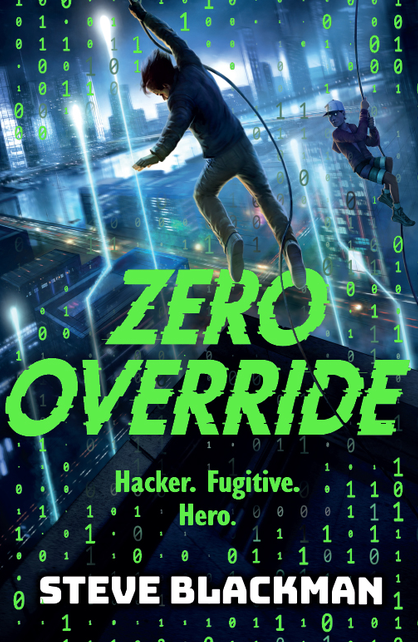 Primary Times speaks with author Steve Blackman about human potential, the role of technology and AI, and our responsibilities in shaping the future…
With 25 years of experience working in digital tech, Steve Blackman knows a thing or two about the rapidly-changing world of technology. Now a debut author, his first novel, Zero Override, is a high-stakes adventure set in a near-future London where humans and humanoid bots coexist, exploring questions around AI, technology and what it really means to be human. As technology continues to shape our everyday lives, we caught up with Steve to find out more, and to get his thoughts on our roles and responsibilities in an increasingly digital world.
What’s one thing about AI that most people get wrong?
A really common misconception is that AI understands the world in the way humans do. It doesn’t. A baby understands physics by dropping a spoon a thousand times. A Large Language Model – such as ChatGPT – can only read about gravity from information that has been published. It will recognise patterns, generate convincing answers and even appear to be creative, which makes it a really powerful tool. But it has no lived experience or emotions, no real understanding of the world. The danger isn’t that AI tools are smarter than people; it’s that people often assume they know more than they do.
How can children tell the difference between something made by a human and something made by AI?
It’s becoming harder to tell, and it’s likely the distinction will continue to blur. Instead of trying to spot AI-generated content, maybe it’s more important for young people to focus on questioning what they’re watching, reading or listening to. Who created it? Why was it created? Is it accurate? Human-created work often reflects personal experience and emotion, while AI-generated content relies on patterns from existing information. The real skill is learning to think critically about all information, wherever it comes from.
In your opinion, what are some of the biggest ethical questions around AI currently?
There are so many, but two stand out to me. The first is responsibility: when AI makes a mistake or causes harm, who is accountable? Building on from that, technologies like AI rely on human-created data, so AI models can inherit or even amplify human prejudices. That’s bad when it comes to recipe recommendations, but when it comes to recruitment or banking or criminal justice, biased algorithms can amplify discrimination in terrifying ways.
Do you think there should be rules about how children use AI tools, and who should decide them?
I think there should be rules about how everyone uses AI, not just young people. It’s becoming part of everyday life, and, like all powerful technologies, these tools need checks and balances in their use. Those rules shouldn’t be decided by technology companies alone. Governments, educators, parents, experts and young people themselves all have a role to play. The goal should be a world where all forms of AI are used safely, responsibly and transparently. This is a key theme in my debut novel, Zero Override, where controls around the national AI framework have been compromised.
How might AI change the way children learn in school over the next 10 years?
I think AI tools have the potential to make education more personalised. Every child learns differently, and AI could help support individual needs by tailoring the way solutions or concepts are explained. At the same time, it could automate many administrative tasks, freeing time-poor teachers to spend more time doing what humans do best: encouraging, mentoring, motivating and building effective learning relationships with students. The most successful classrooms won’t be run by AI. They’ll be places where AI helps teachers focus more on teaching and less on paperwork.
What skills do you think children should focus on now to prepare for an AI-filled future?
This gets right to the heart of the issue. The skills that matter most are the ones that make us human. Creativity, communication, critical thinking, collaboration and curiosity will become more and more valuable as AI becomes more capable. Young people will also depend on greater digital literacy – understanding how AI works, where its limitations are and how to question its outputs. The future won’t belong to people who compete with AI; it will belong to those who know how to work alongside it thoughtfully and responsibly.
What inspired you to explore AI through storytelling rather than non-fiction?
Stories allow readers to experience ideas rather than simply learning about them. AI raises fascinating questions, but I didn’t want to write a manual. I wanted readers to imagine what advanced technology might mean for young people facing hard choices. Fiction encourages emotional engagement, meaning readers don’t just think about the issues, they feel them. That makes storytelling a powerful way to explore the opportunities, risks and ethical dilemmas surrounding AI.
If a young reader takes just one message away from Zero Override, what do you hope it is?
I hope they come away understanding that technology itself isn’t the most important thing – people are. AI will continue to become more powerful, but what will matter more are our choices, values, creativity and sense of responsibility. The future is exciting, and I really want young people to feel that excitement while also recognising that they have a role in shaping it. The future isn’t something that happens to us. It’s something we create together.
Zero Override by Steve Blackman is published by Scholastic, £7.99, and out now.