


Primary Times - the definitive what’s on and where to go family guide of activities and events for children of primary school age. Things to do with your kids during the school holidays including arts and craft activities, music and theatre for children, parties, competitions, days out, and family attractions along with term time drama schools, dance classes, after school clubs and sports activities. Things to do at a place near you!


Beyond Halloween: Discover the Stories Behind Autumn’s Celebrations
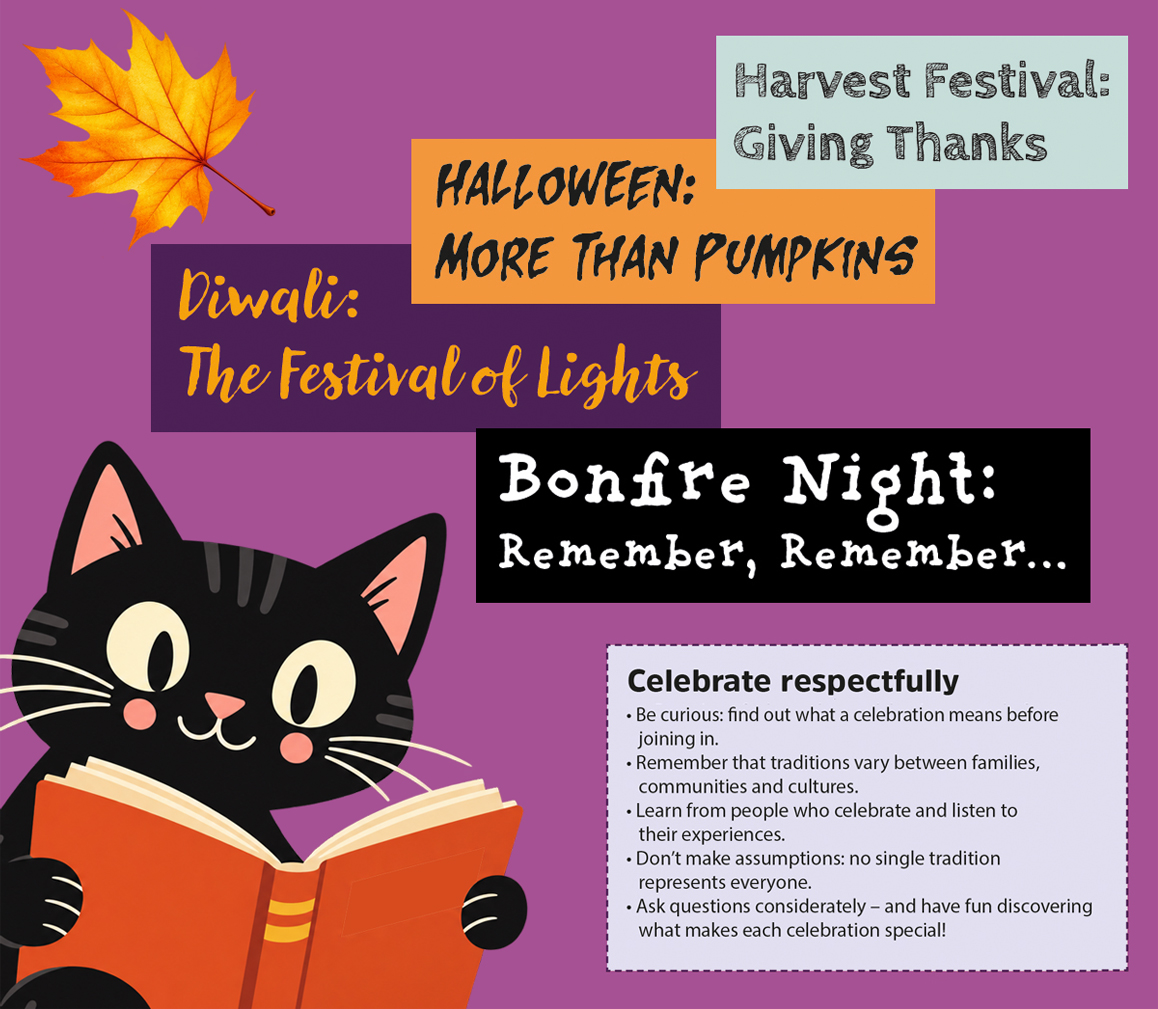 From Harvest Traditions to Diwali Lights, discover the stories and traditions that make Autumn special with Primary Times.
Autumn brings plenty of opportunities to celebrate. Behind the pumpkins, fireworks and delicious seasonal treats are fascinating traditions that have been passed down through generations. So, why do we celebrate some of autumn’s biggest occasions - and how do families enjoy them today?
Harvest Festival: Giving Thanks
Long before supermarkets filled our shelves, communities depended on the crops grown throughout the year. Harvest Festival is a time to give thanks for food and the people who grow it, and to share with those who may need a helping hand.
Churches, schools and community groups celebrate at different times throughout late September and October, often decorating with colourful fruit and vegetables and collecting food for local charities.
Why not make a seasonal fruit crumble, or donate some food to a local collection? It’s a lovely chance to think about where our food comes from - and how we can help others.
Halloween: More Than Pumpkins
Halloween might seem like a modern celebration but its story goes back hundreds of years. Some of its traditions have links to the ancient Celtic festival of Samhain, which marked the end of summer and the beginning of winter.
So, where did all the spooky traditions come from? Dressing up is thought to have roots in old customs where people wore disguises or costumes to protect themselves from wandering spirits. Trick-or-treating developed from customs such as ‘souling’ and ‘guising’, when people would visit homes in costume and receive food or treats in return for songs, prayers or a little entertainment.
Over time, Halloween traditions have evolved. From carved pumpkins to parties, crafts and watching a not-too-scary film, there’s something for everyone.
Diwali: The Festival of Lights
Diwali is celebrated by millions of people around the world, including Hindu, Sikh, Jain and some Buddhist communities. Its meanings vary, but light is an important theme, often representing hope, goodness and the triumph of light over darkness.
Its date changes each year because it follows the Hindu lunar calendar. In 2026, the main day of Diwali is Sunday 8th November, although celebrations can take place over several days. The date and traditions can also vary between different communities and regions.
Families may light diyas, decorate their homes with rangoli designs, wear special clothes, exchange gifts and enjoy delicious foods and sweets together. The best way to learn about Diwali is to listen to people who celebrate it and discover the traditions that are meaningful to their families.
Taste of Autumn
Autumn offers plenty to tempt our taste buds. Many celebrations have their own special foods and recipes, often bringing people together around the table. Why not explore some seasonal flavours and try something new together?
Harvest › seasonal fruit/vegetables, harvest loaf
Halloween › pumpkin-based recipe
Bonfire Night › jacket potatoes, parkin, toffee apples
Diwali › ladoos, jalebi or other traditional sweets
Ready to celebrate?
Be curious and open-minded, remembering that traditions vary, and enjoy learning from the people and communities who celebrate them.