


Primary Times - the definitive what’s on and where to go family guide of activities and events for children of primary school age. Things to do with your kids during the school holidays including arts and craft activities, music and theatre for children, parties, competitions, days out, and family attractions along with term time drama schools, dance classes, after school clubs and sports activities. Things to do at a place near you!

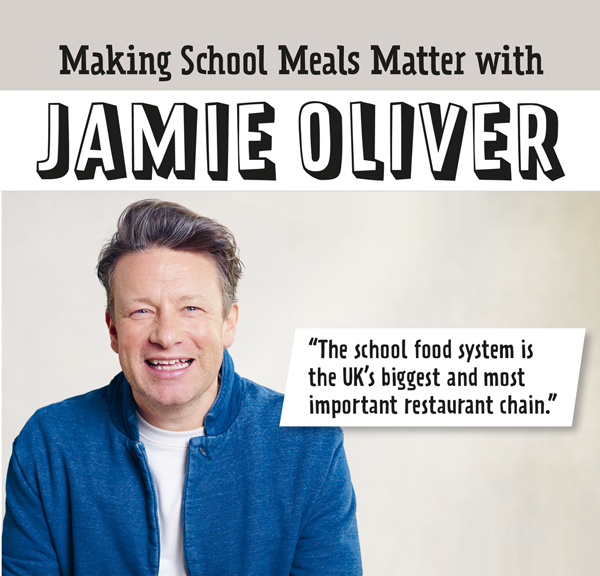
Making School Meals Matter with Jamie Oliver
 Primary Times chats to Jamie Oliver about transforming school meals, inspiring healthy habits and empowering the next generation…
A hugely influential chef and food campaigner, Jamie Oliver is a global phenomenon with bestselling cookery books loved by families everywhere. Through The Jamie Oliver Good School Food Awards, he’s celebrating food wins in schools and championing better food education for all. We spoke with Jamie to talk school meals, lunchbox ideas, life skills, and empowering the confident young cooks of the future.
What changes have you seen in school meals since you first started campaigning?
A lot has changed since School Dinners – can you believe back then we had standards for dog food but not what kids ate at school? There’s definitely been progress and there are some amazing things happening – we do our best to find those pockets of joy and celebrate them through my Good School Food Awards. But it's got to be for every kid, and the reality is we just aren't there yet.
Do you think there’s still room for improvement or further changes?
Absolutely – and we must keep pushing for change because the school food system is the UK’s biggest and most important restaurant chain. It quite literally shapes what millions of children eat for lunch, 190 days of the year, from the age of 4 to 16. Come September 2026, with universal breakfast clubs and wider access to free school meals, there will be even more covers to serve – during term time, around two-thirds of a child’s meals will be provided at school. And while I wholeheartedly support that expansion, it's got to be good food – and that's only easy with new school food standards that are actually enforced. Right now, there’s still food in some school canteens that would be deemed too unhealthy to be at the end of a supermarket aisle! We’ve got to fix that.
Have you got a favourite “kid-approved” school lunch you wish every child could have?
Variety is key, serving up colourful plates with a range of delicious veggies and fruits, and balancing them with all the different food groups, making sure they’re getting plenty of fibre and things we know kids under-index in like fish. As well as being nourishing and giving our kids all the nutrients that they need, of course the challenge is dishing up something they actually want to tuck into. Things we’ve seen to be really popular through the schools celebrated in the Good School Food Awards are dishes like added-veg spag bol or shepherd’s pie, tasty pastas where you can pack veg into the sauce, and familiar favourites made from scratch, like veggie-topped pizza or fish fingers.
Which staple ingredients should every family keep in the cupboard?
I’m a big fan of tins – beans, pulses, veg, fruit and fish! They’re all super-handy staples to have ready-and-waiting in the cupboard for creating fast, affordable, healthy meals. I also think embracing frozen veg and fruit is the way to go if you’re working to a budget – not only is it frozen quickly after harvesting, meaning it retains its nutritional value, it’s usually cheaper than fresh, and is a fantastic way to avoid food waste as you can just use a handful or two of what you need, when you need it.
How else can families avoid waste?
Now, this might sound simple, but you can minimise food waste hugely by having a bit of a plan – check your fridge before you shop and only buy what you need, use things in the right order, and be mindful of supermarket offers (think, can I make good use of this?). It’s also a lot to do with how you store things. For example, I like to wrap my green veg, salad leaves and herbs in damp kitchen paper before I put them in the fridge to help keep them fresher for longer. And, I make sure my potatoes are kept in a cool, dark, dry place. But, if things are starting to look past their best, cook and freeze veggies for another day, chunk up fruit and freeze it for smoothies, chop and add veg to soups and stews for bonus vitamins, or turn them into jams, compotes or pickles for jazzing up future meals.
Which wholesome lunchbox swaps do you recommend instead of sugary snacks?
We all know that getting kids to wolf down a load of raw veg sticks is expecting a lot. But, having said that, what’s worked with my gang is giving them interesting things to dunk them in – simple yoghurt dips, houmous, pesto, even just some balsamic vinegar! Trust me, it really helps! When it comes to lunchboxes, I find mixing things up and offering something other than a sandwich keeps them interested – things like pots of pasta, tortillas, shake-it-up salads, even leftover stews or soups (if you have a thermos flask!) always go down well. Cooking purposeful extras or embracing leftovers can be a quick win. If kids are eating things that will keep them feeling fuller for longer, they’re less likely to look for those quick-fix, sugary snacks.
🍎 Discover 6 healthy school snack ideas from Jamie Oliver
Do you think food education should be part of the school curriculum? If so, why?
If we want a curriculum that truly prepares young people for life and work, we must recognise that the ability to feed yourself is, arguably, the most important life skill.
Every child should leave school with the ability to cook basic, nourishing meals, understand the value of fresh ingredients, and appreciate the role food plays in the health and wellbeing of themselves and the planet. If the government is serious about building a curriculum that leaves no child behind, then food education must be at its heart.
Right now, Cooking and Nutrition is a mandatory part of Design and Technology on the national curriculum, which puts us ahead of countries where food education is just optional. But even with this advantage, the curriculum across all stages is heavily skewed toward building knowledge about healthy eating, missing the mark on wider aspects of food and nutrition — and not really equipping kids with the hands-on food skills and creativity they’ll need for life.
From what we've seen, and from what teachers on the ground tell us, this gap comes down to several issues: limited training in Cooking and Nutrition during Initial Teacher Training, a lack of CPD opportunities, scarce resources to support the curriculum, insufficient funding for ingredients and equipment, and a timetable that squeezes out time for practical subjects. This is symptomatic of a system that does not recognise the value of food education. And that needs to change.
My 10 Skills programme is about teaching and – more importantly – empowering children to cook from scratch, and we’re now in a quarter of secondary schools across the UK, with plans to launch 10 Skills primary this May. The evidence we’ve seen so far is super clear in terms of the positive impact this life skill has on kids' confidence, not to mention the impact on their health. We hear about kids teaching their parents to cook at home and cooking up tea for the whole family, so it’s a full circle thing.
How do you feel about supermarkets’ simpler-ingredient ranges?
The big dream is to have a food environment that makes it easy for children – and parents – to make nutritious choices, providing them with everything they need to grow and thrive. If the food environment can protect and prevent people from overconsuming less nutritious foods that increase their risk of diet-related disease, that’s going to be a huge step forward. So, in my book, anything that helps to break down barriers to healthy eating and encourages children to cook, eat and love real food is a win.
What inspired the Good School Food Awards, and what’s new for 2026?
The awards, for me, are really about highlighting and celebrating all the wonderful people that feed, nourish, and inspire our kids at school when it comes to food. It’s a big job, and it’s super important – these people are basically at the frontline of our children’s health. And the people we meet are truly extraordinary – and make a real tangible difference to their communities. We've seen everything from a noticeable rise in school applications to school meal uptake as high as 98%, and more kids choosing to take food and nutrition, hospitality and catering at GCSE and beyond. This year we’re excited to be welcoming some new faces to the judging panel, including Ella Toone, Joe Swash and Dani Dyer-Bowen!
What are the judges looking for?
We’re really looking for those that go above and beyond, despite often challenging circumstances or budget constraints – of which there are many – to deliver amazing food, inspiring lessons, hands-on activities, anything that puts food at the heart of the school community. There are different criteria for each award, but some of things we consider are how schools are encouraging kids to get more veg, fruit, protein and whole grain carbs into their meals, how are they approaching their breakfast club offerings, and what supportive info is available to parents that are providing kids with a packed lunch.
What do you hope the Awards will achieve in the next few years?
We really want to see education shift to centre around food, and the hope is that by shining a spotlight on some of these incredible success stories, we’re actively proving to schools, to families and to the government just how impactful food education can be. I’d love to see more people being inspired to pursue a career in food, nutrition, catering or hospitality. It’s also about fuelling the future – the better fuelled the next generation is, the better prospects for everything, from the economy to the NHS.
What’s next on the horizon?
I’m excited to be bringing Jamie’s Italian back to the UK. We’ll be opening in Leicester Square in the coming weeks so if you’re in town, do come and visit us. I’m also working on some exciting publishing and TV projects, so watch this space! And if you haven’t seen them yet, check out my first-word recipe books ‘Let’s Make…’. We’ve got four out so far, pancakes, pizza, cookies and pasta, and more to come. They’re really about introducing our littlest ones to food from the earliest age. I’m super proud of them.
Look out for Jamie’s mini veg tortillas recipe in the Easter issue of Primary Times!
Image credits: Paul Stuart
© 2024 Jamie Oliver Enterprises Ltd.